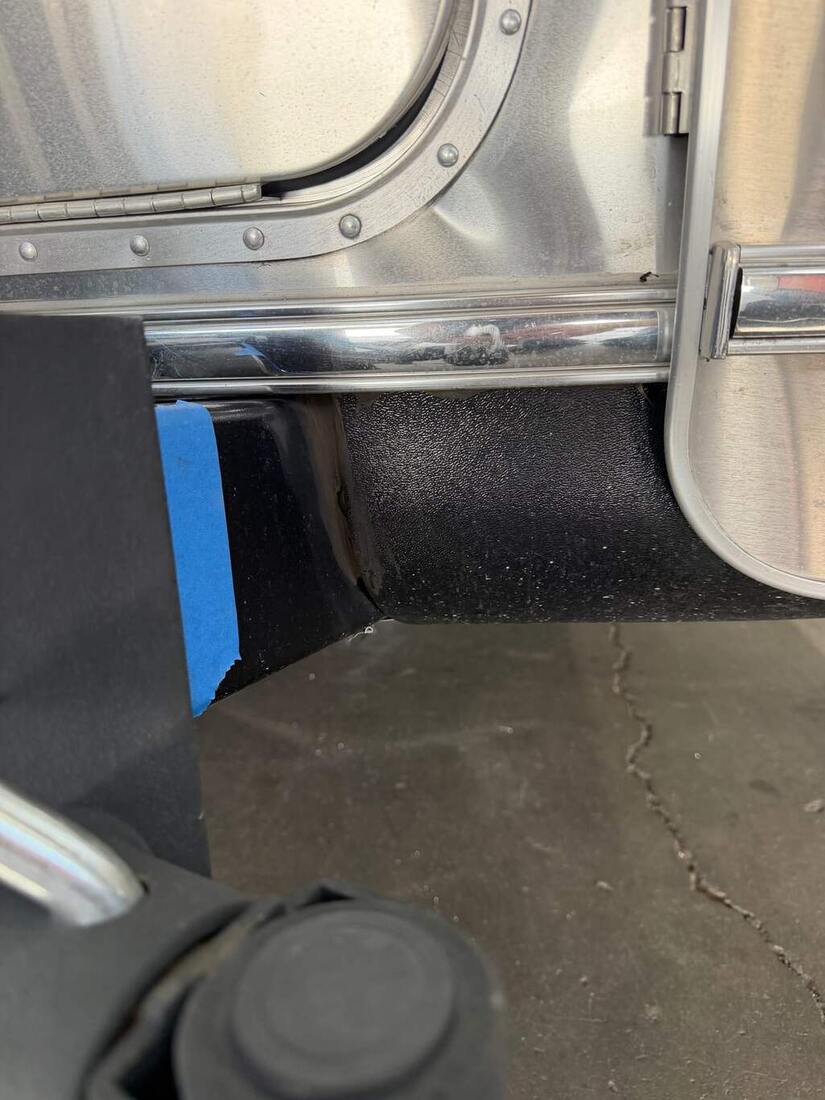
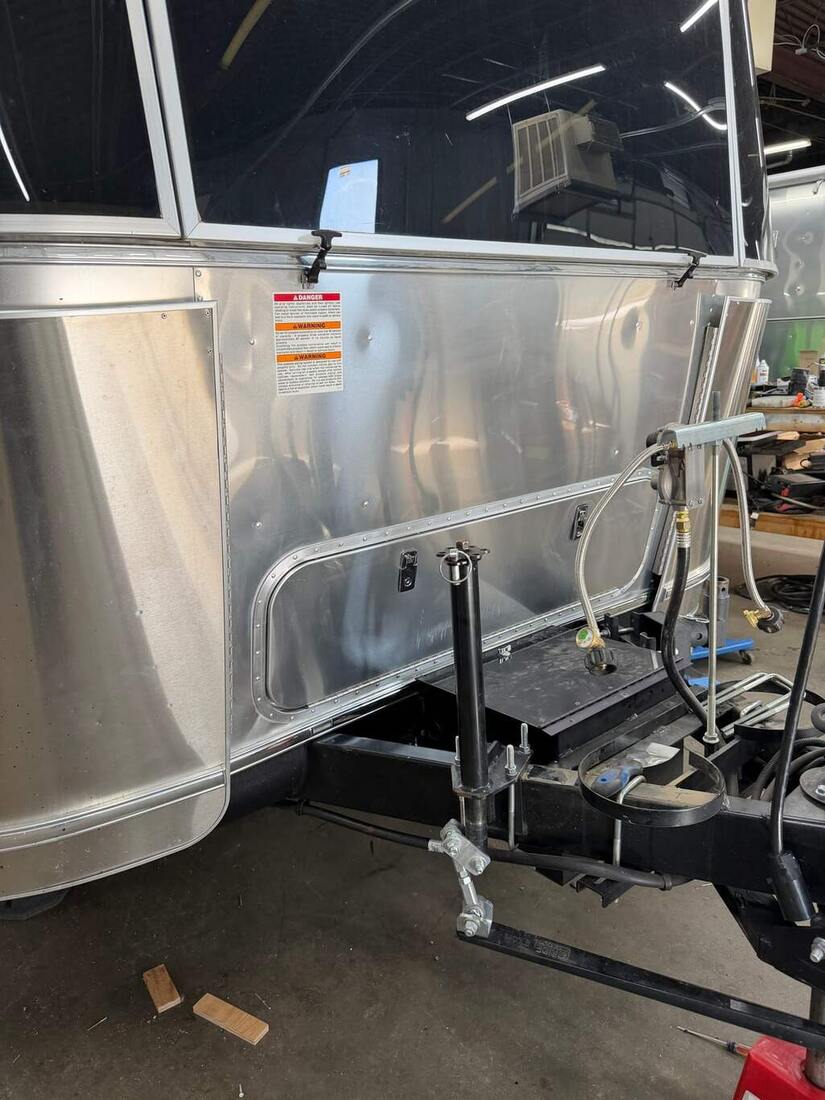
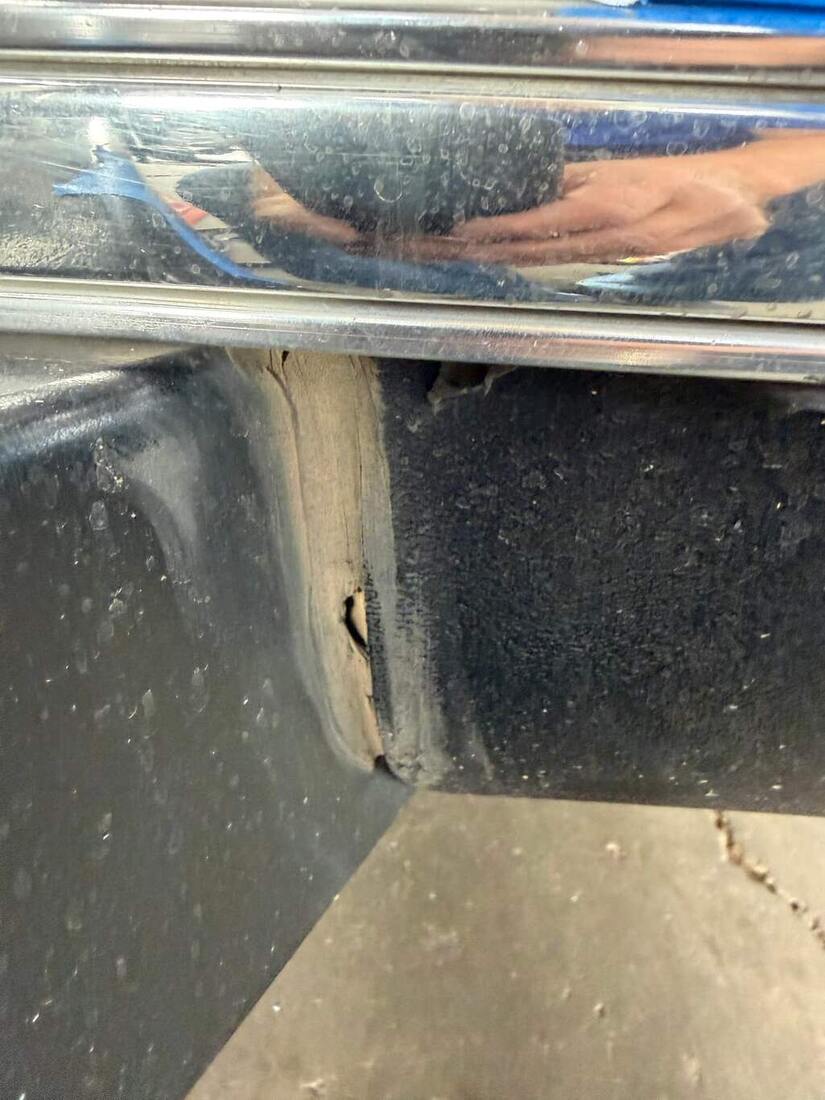
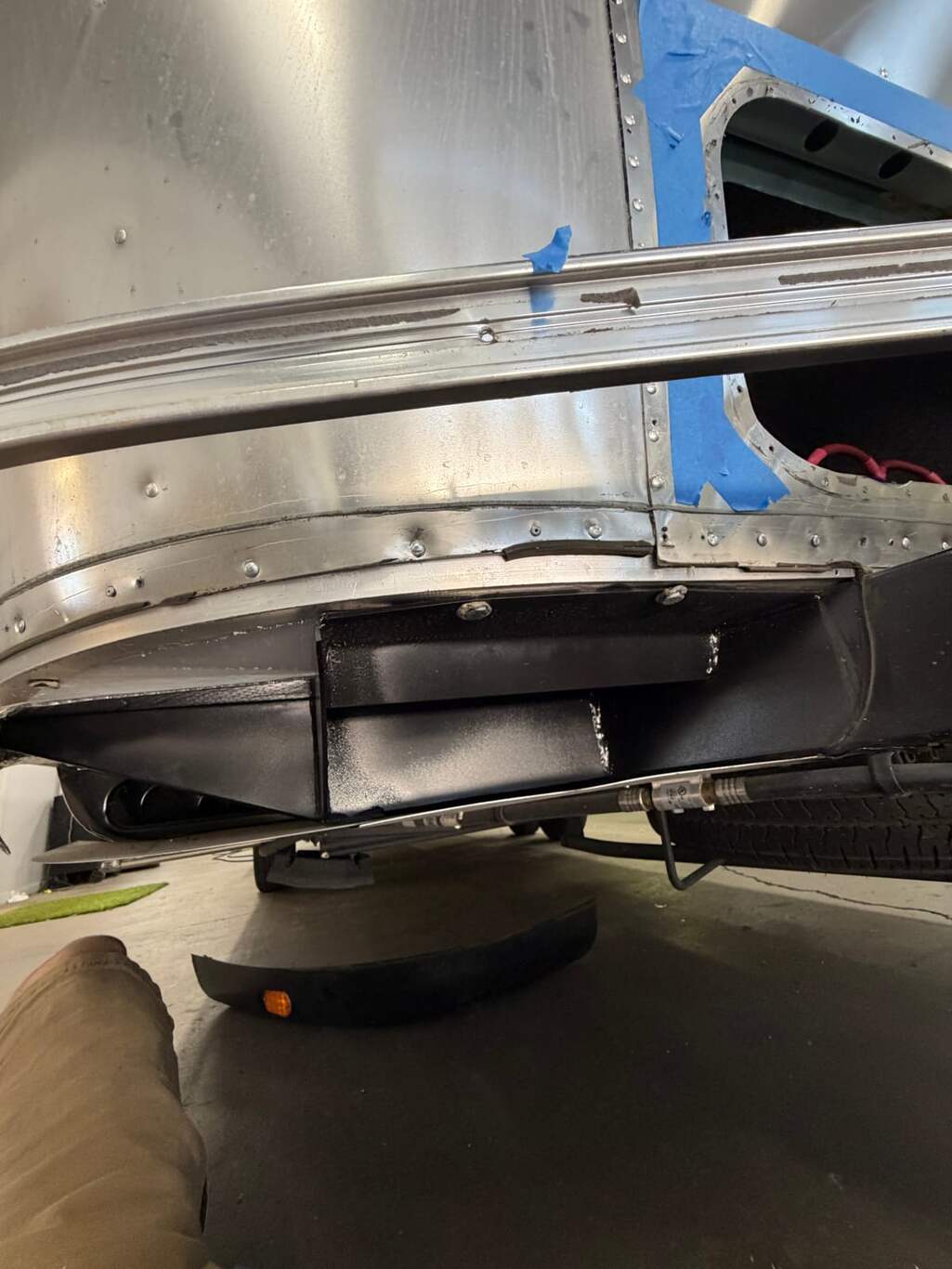
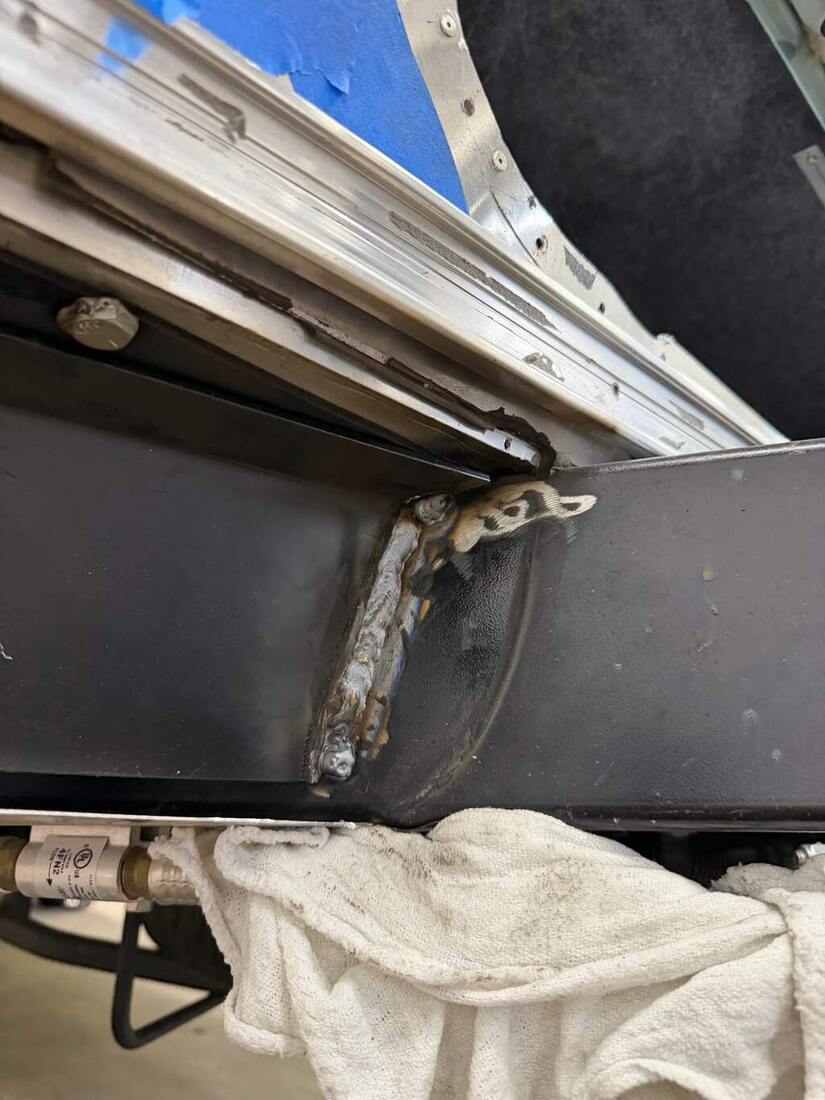
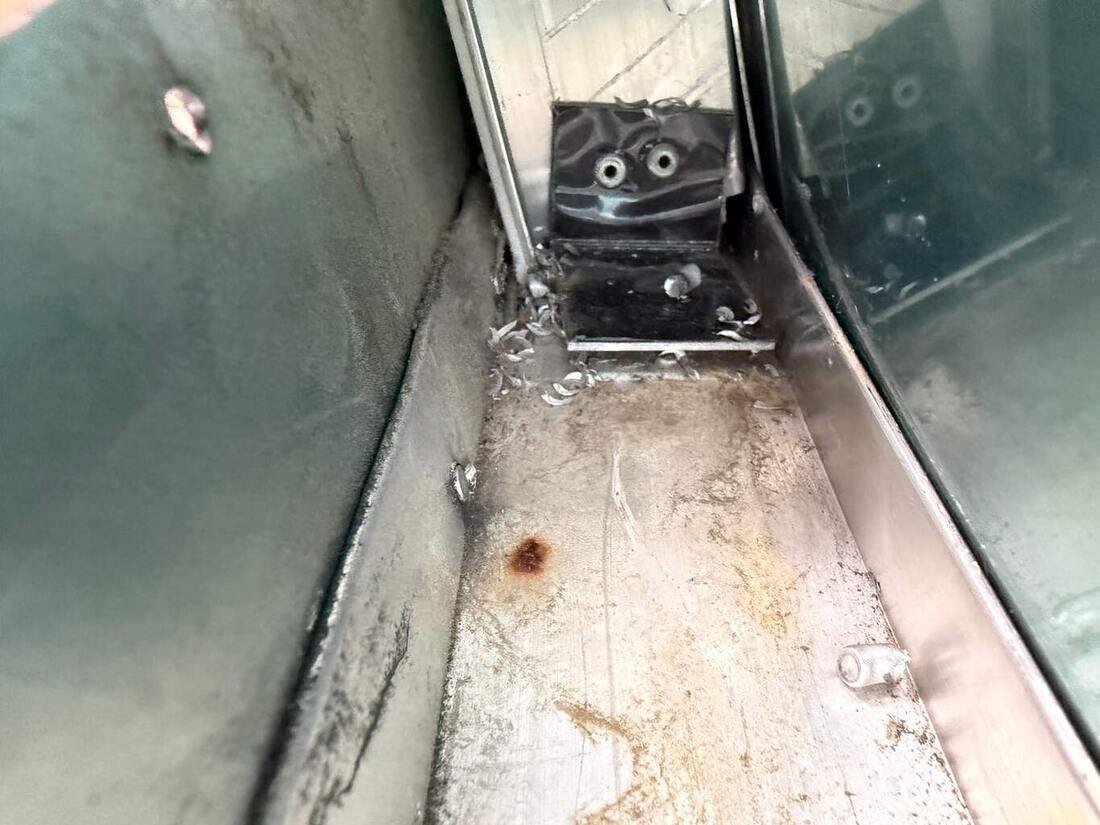
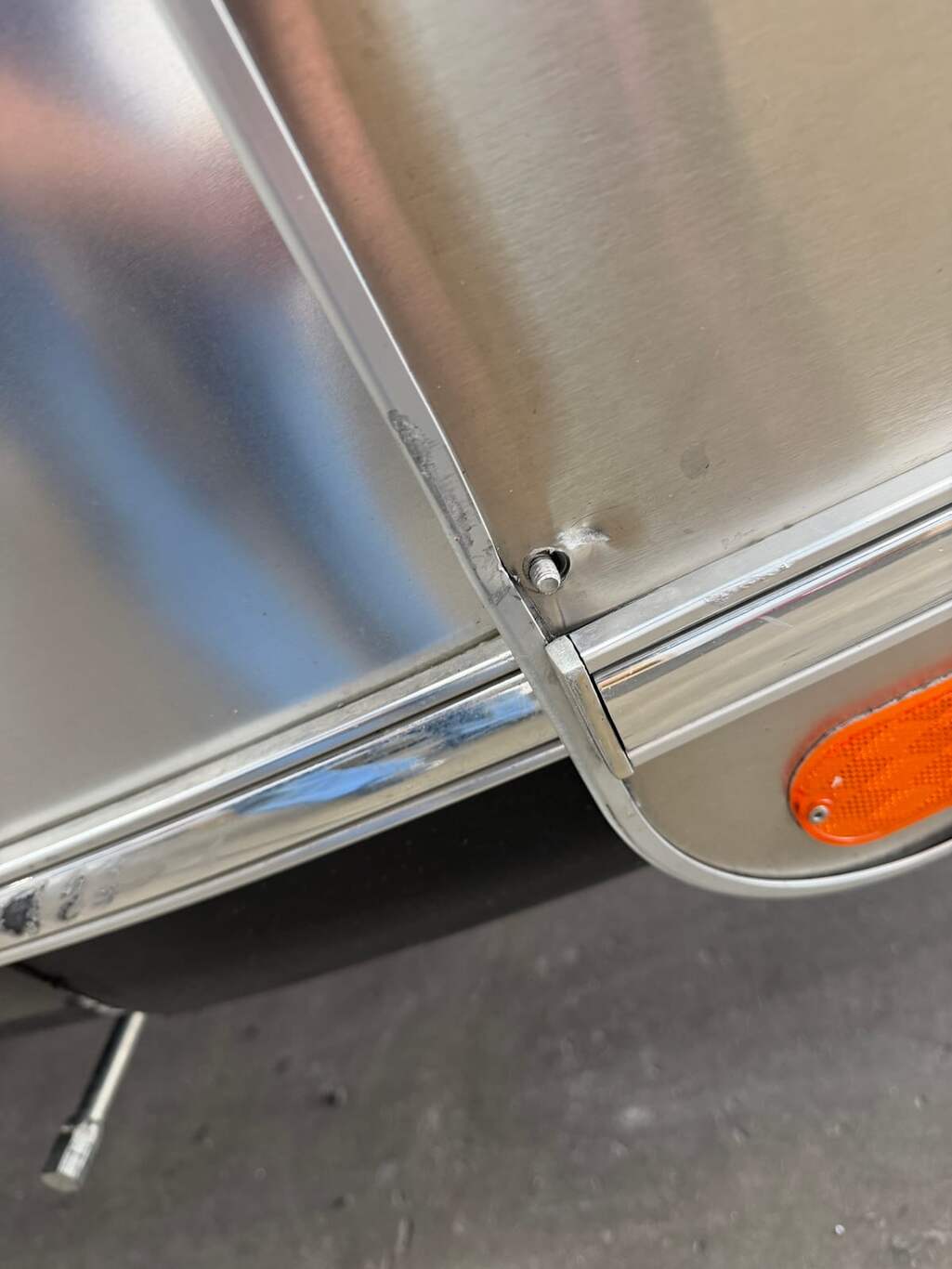
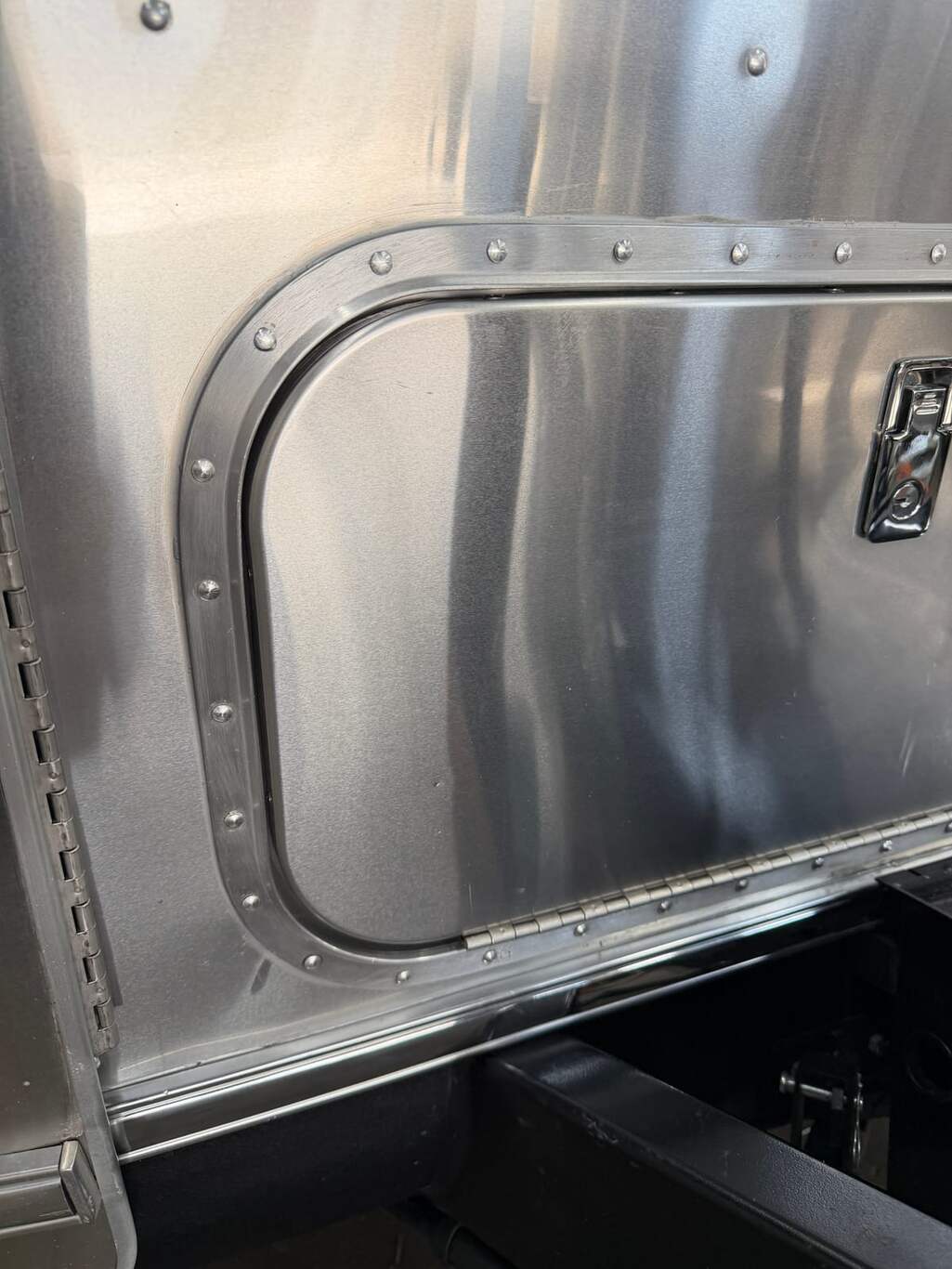
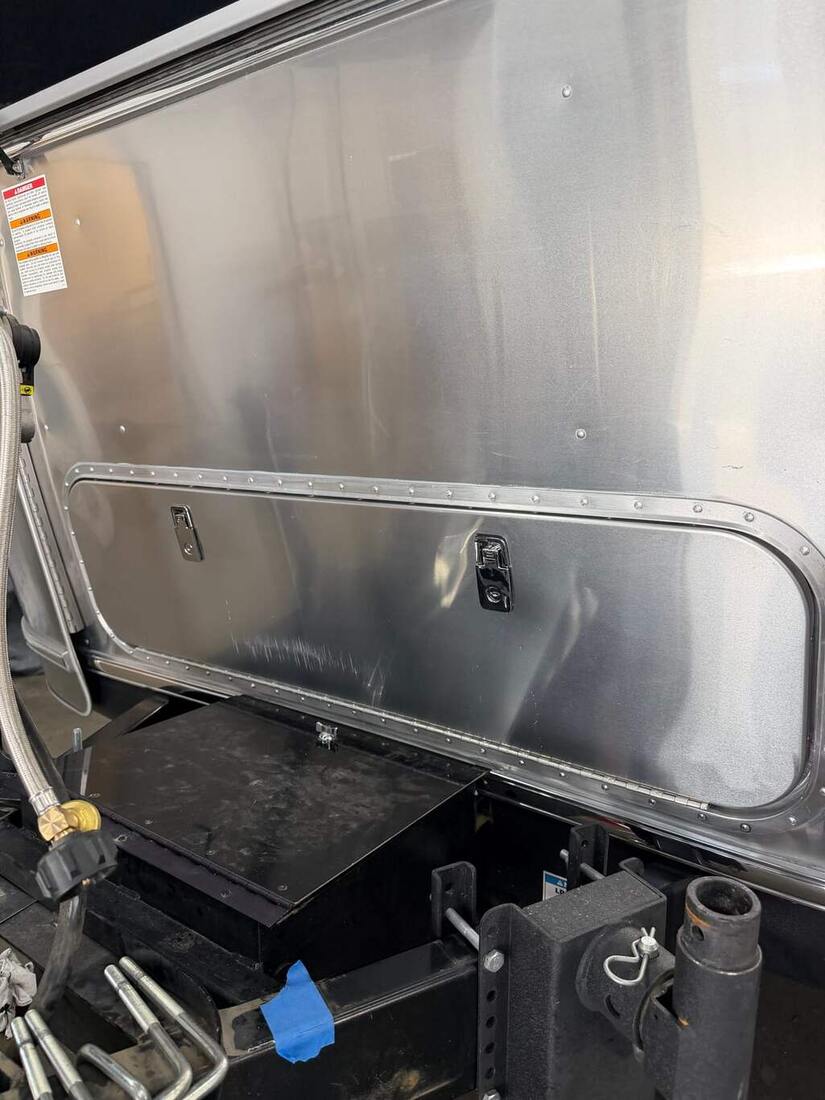
Front End Separation is one of the more serious structural issues that can affect certain Airstream travel trailers — especially models with front storage compartments. The good news: it leaves clues long before it becomes a major repair, if you know where to look.
What is Front End Separation?
Front End Separation occurs when the aluminum shell begins separating from the frame structure at the front of the trailer. On some models — particularly those with front storage compartments — additional weight and long-term flex stress the shell-to-frame connection. Over time, that stress creates movement, gaps, and structural misalignment.
This is not cosmetic. It is structural.
Inspect the front seam line
Stand directly in front of your Airstream and look at the bottom corners — both the right and left side. Watch for:
- A seam that looks wider than it used to
- A wrinkle in the skin
- A gap between the skin and the rub rail
- Rivets that are missing or loose in that area
Check for movement or flex
Gently press on the front shell area near the seam. You should not see noticeable flexing or movement. Excess movement may indicate the shell is no longer fully secured to the frame connection points. This often becomes more visible when towing over uneven surfaces.
Inspect inside the front compartment
Open the front storage compartment, if your model has one, and look for:
- Cracks or stress marks near mounting points
- Separation between interior paneling and structure
- Fasteners that appear loose or pulled
- Signs of water intrusion
Structural stress often shows inside before it becomes obvious outside.
Watch for new noises while towing
If you start hearing new creaking, popping, or shifting noises from the front of the trailer while towing, that can indicate structural movement. Airstream shells are designed to move slightly — but unusual or increasing noise should not be ignored.
Why it happens
Common contributing factors include:
- Weight in the front storage compartment
- Improper weight distribution
- Long-term road vibration
- Frame flex over time
- Structural fatigue
Not every Airstream will develop this issue, but certain model years and configurations are more prone to it.
What happens if you ignore it?
The gap will not close on its own. Left unaddressed, separation can increase structural stress, worsen alignment, lead to water intrusion, and require more extensive structural correction. The earlier it's diagnosed, the cleaner the repair.
What to do if you suspect separation
Do not attempt a cosmetic fix. This is not a caulking issue and it is not a cosmetic seam problem — it requires structural inspection and correction by a shop familiar with Airstream aluminum construction. If you notice any of the signs above, schedule an inspection promptly. A proper evaluation will determine:
- Whether separation is present
- The severity
- Whether reinforcement is needed
- The appropriate repair approach
Why proper repair matters
Front End Separation must be corrected structurally — not patched. The repair involves restoring shell alignment, reinforcing structural connection points, and ensuring proper frame-to-shell integrity going forward. Handled correctly, the trailer returns to proper structural integrity and continues performing as designed.
Catching Front End Separation early protects your investment, preserves resale value, and prevents larger structural costs later. Inspection is far less expensive than structural neglect.